
 EN
EN
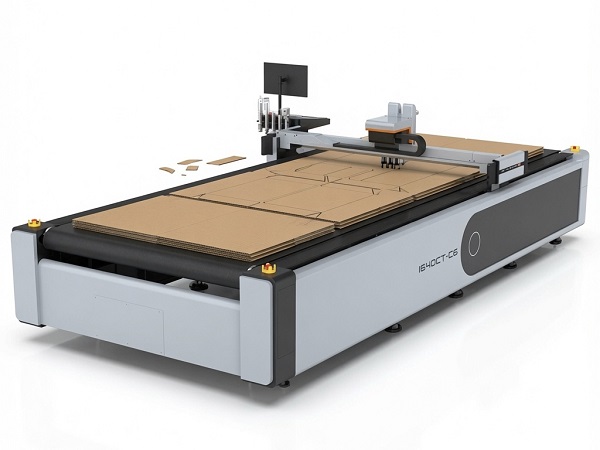
In modern manufacturing, speed and flexibility are no longer optional features; they have become decisive competitive advantages. Industries such as packaging, automotive interiors, footwear, textiles, and composite materials are under continuous pressure to shorten the R&D cycle while maintaining high production quality standards. One of the most effective solutions for this transformation is the carton box cutting machine - this crucial tool bridges the gap between the early prototype production and full-scale mass production.
As the global demand for personalized customization, rapid iteration, and high-quality, cost-effective manufacturing continues to grow, digital cutting technology has become indispensable. For enterprises that mainly process non-metallic materials (such as leather, fabric, corrugated cardboard, and composite panels), advanced CNC cutting systems are reshaping the design, testing, and large-scale production processes of products in an unprecedented way.
This article will delve into how the carton box cutting machine can assist manufacturers in optimizing their workflow, accelerating product development, and achieving a seamless transition from prototype production to mass production.
The Manufacturing Gap: From Prototype to Production
The traditional manufacturing process often has a crucial inefficiency bottleneck: the disconnection between prototype production and mass production.
During the prototype development stage, designers usually rely on manual cutting, making sample molds, or outsourcing small-scale processing. When design iterations are frequent, these methods are often inefficient, result in unstable outcomes, and are costly. Once the design is finalized, if it is to be scaled up for mass production, it is often necessary to replace completely different machinery or tooling fixtures, which leads to delivery delays, increased costs, and inconsistent product quality.
This disconnection phenomenon has led to a series of challenges, such as a long product development cycle, high costs for prototype production, low material utilization efficiency, limited design flexibility, and difficulties in achieving large-scale production of complex shapes or packaging structures.
The carton box cutting machine effectively addresses these challenges by providing a unified digital workflow covering the entire process from design files to finished products, without the need to replace the cutting tools or switch between different systems.
What Is a Carton Box Cutting Machine?
A carton box cutting machine is a digital cutting system driven by CNC, specifically designed for high-precision and automated processing of corrugated cardboard and other sheet materials. It utilizes vibration knives, indentation tools, and cutting heads controlled by computer software to achieve precise cutting, indentation, and punching operations.
Unlike the traditional die-cutting process that requires physical molds, the CNC carton cutting machine operates directly based on digital files. This not only eliminates the need for expensive molds, but also significantly reduces the time required for equipment setup and preparation.
Key capabilities typically include:
High-precision cutting of corrugated board
Creasing for folding lines
Partial cuts and perforations
Rapid switching between design files
Compatibility with CAD-based design systems
It is precisely because of this high degree of flexibility that this equipment is particularly valuable in the fields of packaging research and development, sample production, as well as small and medium batch production.
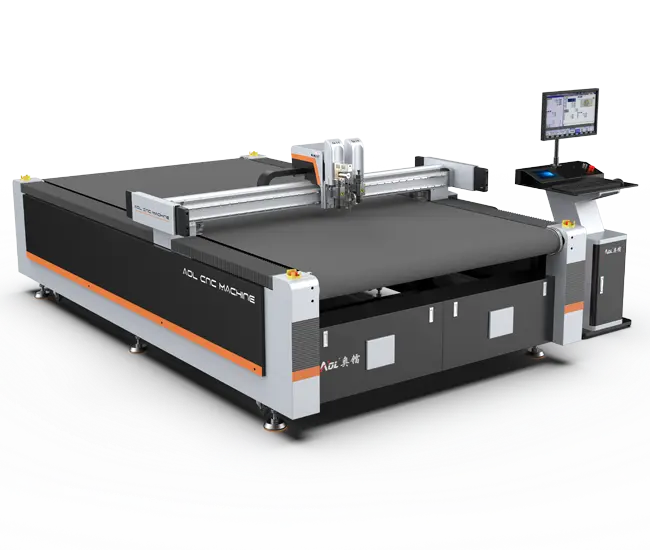
Accelerating Prototyping with Digital Precision
One of the most significant advantages of the carton box cutting machine lies in its substantial improvement in the speed and accuracy of prototype production.
In the traditional workflow, due to the constraints of mold production requirements, it often took several days or even weeks to complete the production of a packaging prototype. However, with the help of the digital cutting system, designers can transform their design concepts into physical samples in just a few hours.
Faster Iteration Cycles
Designers can quickly modify digital drawings and immediately produce new samples without incurring additional equipment setup costs. This advantage enables multiple design iterations to be completed within just one day, thereby effectively enhancing design quality and shortening the product launch cycle.
High Fidelity to Final Product
Given that the equipment used for prototype production can also be directly applied to mass production, the prototypes produced can highly resemble the final product in terms of shape and details. This completely eliminates various errors and deviations that often occur during the transition from manual prototyping to mold-based production.
Reduced Material Waste
Digital layout software can intelligently optimize the layout of each piece of raw material, ensuring the maximum utilization of materials and minimizing waste. This advantage is particularly valuable for the packaging industry, which is crucial for cost control.
Enabling Flexible Small-Batch Production
With the rise of e-commerce, the popularity of customized packaging, and the shortening of product life cycles, the market demand for small-batch production capacity is increasing day by day. However, due to the high cost of molds, traditional die-cutting systems often lack economic benefits when conducting small-batch production. Carton box cutting machines completely solve this problem by eliminating the need for physical molds.
Ideal for Short Runs
Manufacturers do not need to invest a large amount of money in purchasing expensive molds, and can easily achieve small-scale production. This is particularly applicable to the following application scenarios:
Custom packaging brands
Seasonal product launches
Promotional packaging campaigns
Market testing new designs
On-Demand Manufacturing
The production plan can be flexibly arranged according to actual needs, rather than being limited to the large-scale production mode pre-planned in advance. This not only helps to alleviate inventory pressure, but also effectively improves the efficiency of cash flow turnover.
Seamless File Switching
Operators can instantly switch between different packaging designs, enabling the completion of various types of production tasks on the same equipment within just one shift.
Bridging the Gap to Mass Production
Although carton box cutting machines are often regarded as tools exclusively used for prototyping and small-scale production, they also play a crucial role in facilitating the smooth transition to mass production.
Digital Consistency Across All Stages
Since both prototype production and formal production use the same digital file, design consistency is consistently maintained throughout the entire product lifecycle. This helps significantly reduce various errors that are typically prone to occur when transferring design plans to industrial-grade die-cutting systems.
Pre-Production Validation
Before investing a large amount of money in purchasing expensive large-scale production molds, manufacturers can use physical samples produced by a CNC system to conduct pre-validation of the structural integrity, folding performance, and packaging functions of the product.
Hybrid Production Models
Many factories now adopt a hybrid approach:
CNC cutting machines for prototyping and flexible orders
Traditional die-cutting for ultra-high-volume production
This combination model not only ensures the flexibility and agility of the production process, but also meets the large-scale demand for capacity expansion.
Applications Across Industries
Although carton box cutting machines are mainly closely related to the packaging industry, their application scope has extended to many other fields.
Packaging Industry
The most common application is corrugated packaging design and production, including:
Shipping boxes
Retail packaging
Luxury packaging prototypes
E-commerce mailers
Automotive Industry
Processing of internal packaging, protective components and non-metallic composite material parts for the design verification stage.
Footwear and Apparel
Support the research and development as well as production of shoe boxes, clothing packaging and structural linings.
Advertising and Display
Help with the production of corrugated display stands, promotional display fixtures and exhibition prototypes.
Composite Materials
Apart from cardboard, many cutting systems can also process lightweight composite material sheets used in industrial applications.
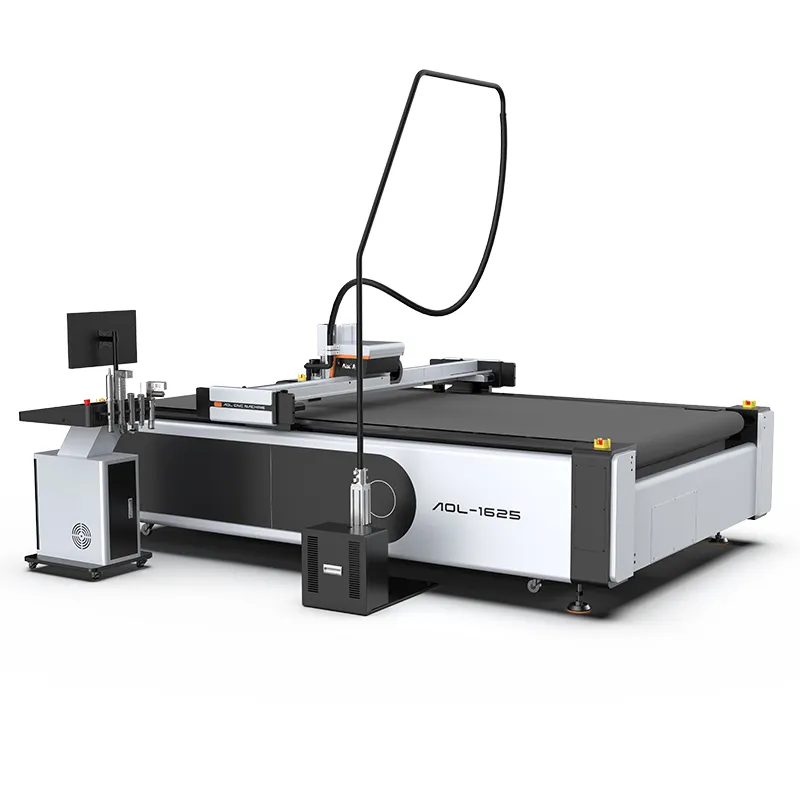
AOL’s Role in Advanced Cutting Solutions
As a manufacturer specializing in CNC cutting technology, AOL is committed to developing high-performance digital cutting systems for non-metallic materials. The applications cover fields such as leather, textiles, composite materials, and corrugated cardboard.
By integrating advanced engineering technology with intelligent control systems, AOL's solution aims to provide comprehensive support to manufacturers, from the initial concept development stage to the large-scale production and manufacturing process.
Our goal is not only to enhance the cutting performance, but also to help enterprises achieve greater agility, production efficiency and market competitiveness in the global market.
The Future of Packaging and Digital Manufacturing
The packaging industry is rapidly evolving toward fully digital, flexible production systems. As customization becomes standard and product life cycles shorten, traditional manufacturing methods are increasingly insufficient.
Carton box cutting machines represent a key step in this evolution. They eliminate the barriers between design and production, enabling a continuous workflow where ideas can be tested, refined, and scaled without interruption.
In the future, we can expect:
Greater automation in packaging design
AI-driven optimization of cutting patterns
Fully digital factories with minimal tooling dependency
On-demand global production networks
Conclusion
The carton box cutting machine is not merely a piece of equipment; it is a bridge connecting creative ideas with industrial production. By integrating prototype creation and mass production within the same digital workflow, it enables manufacturers to have faster innovation capabilities, lower operational costs, and more efficient market responsiveness.
For industries that highly rely on speed, precision and flexibility, adopting CNC cutting technology is no longer merely a competitive advantage, but is increasingly becoming an indispensable and necessary requirement.
As the manufacturing industry continues to evolve, those enterprises that actively embrace digital cutting solutions will undoubtedly gain the upper hand, establishing their leading position in the industry in terms of production efficiency, personalized customization, and global scale expansion.
Table of Contents
- The Manufacturing Gap: From Prototype to Production
- What Is a Carton Box Cutting Machine?
- Accelerating Prototyping with Digital Precision
- Enabling Flexible Small-Batch Production
- Bridging the Gap to Mass Production
- Applications Across Industries
- AOL’s Role in Advanced Cutting Solutions
- The Future of Packaging and Digital Manufacturing
- Conclusion