
 EN
EN
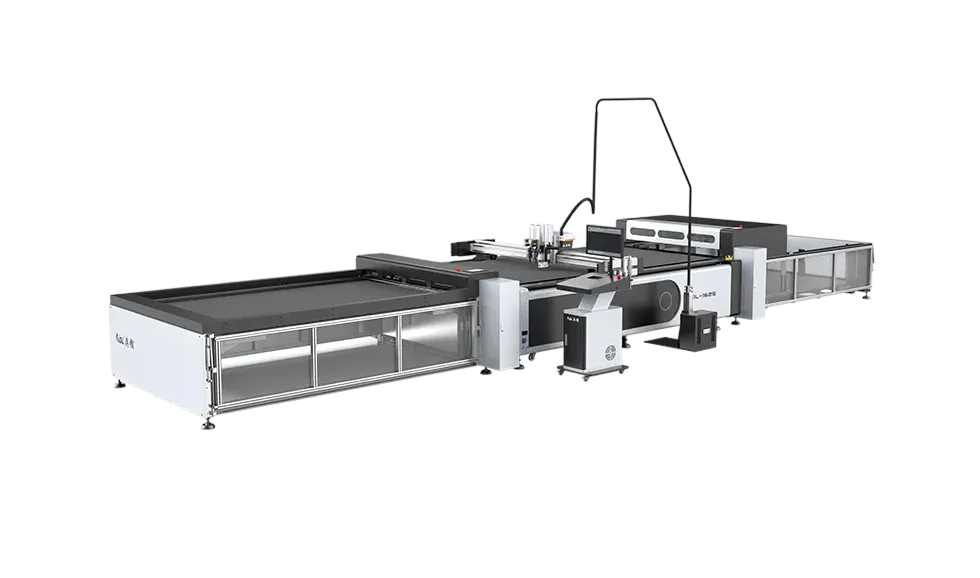
Material Compatibility: Matching Oscillating Cutting Machine Capabilities to Composite Types and Thicknesses
How Composite Heterogeneity (CFRP, GFRP, Honeycomb, Prepreg) Drives Tool Geometry and Power Requirements
Advanced composites come with their own unique challenges when it comes to cutting. These include carbon fiber reinforced polymer (CFRP), glass fiber reinforced polymer (GFRP), honeycomb cores, and prepreg materials. Each material requires specific settings on oscillating cutting machines. For example, CFRP is extremely abrasive so diamond coated blades are needed to stop them wearing out too quickly. With GFRP, operators usually find that slower oscillation speeds work better because they reduce fiber pull out during cutting. Prepreg stacks present another challenge altogether since they need built in temperature controls to avoid problems like early resin curing or material degradation. When looking at power requirements, there's quite a difference between materials. Honeycomb structures actually cut pretty well with high frequency oscillation around 5000 RPM or more and not much downward pressure. But dense CFRP laminates tell a different story. They need about 30 percent more motor torque just to maintain proper feed rates without the machine stalling mid cut.
Thickness-Dependent Parameters: Blade Oscillation Speed, Downforce, and Feed Rate Optimization
Material thickness governs three interdependent machine parameters:
- Blade speed: Thin laminates (< 3 mm) perform best at 3,000–4,000 oscillations/min—slower speeds risk delamination, faster ones induce vibration-induced edge fuzzing.
- Downforce: Thicker sections (10–25 mm) require 15–20% higher pressure to ensure consistent blade engagement through stacked layers.
-
Feed rate: Optimized for each thickness and composite type, it reduces cycle times by 20–30% without sacrificing edge fidelity. For 15 mm CFRP, a feed rate of 0.8–1.2 m/min delivers optimal balance between throughput and clean, resin-intact edges.
These adjustments collectively mitigate matrix cracking in phenolic composites and limit thermal accumulation in thermoplastics—critical for dimensional stability and post-process integrity.
Edge Quality Assurance: Preventing Delamination and Fiber Fraying with Precision Oscillating Cutting Machine Control
Oscillation Frequency and Amplitude Tuning for Minimized Interlaminar Shear Stress
Getting good edge quality in composite materials really depends on how well we control those oscillations during processing. When the amplitude gets too high, it actually cuts through those reinforcing fibers. On the flip side, if the frequency isn't quite right, we end up with all this frictional heat that starts breaking down the resin matrix, particularly problematic in CFRP and GFRP materials. Studies indicate that working within certain ranges makes a big difference. Frequencies between 20 and 30 Hz paired with amplitudes around 0.5 to 2 mm can cut down interlaminar shear stress by roughly 40 percent, which helps keep those layers together in honeycomb structures and prepreg stacks. We've noticed something interesting too: higher frequencies tend to stop those fibers from pulling out in woven materials, whereas keeping the amplitude under control prevents tiny cracks from forming in brittle thermoset resins. Take 8 mm CFRP as an example. Set it to about 25 Hz with 1.2 mm amplitude and we see almost no delamination compared to traditional approaches. And when manufacturers implement real time force sensors, they can adjust parameters on the fly. Our data suggests that staying within 15% of these ideal settings keeps fraying defects down by about a fifth, which matters a lot in production environments.
Performance-Critical Specifications: Vacuum Hold-Down, Work Area, and CNC Integration for Composite Production
Vacuum System Requirements (≥ 85 kPa) and Table Dimensions (≥ 2.5 × 1.5 m) for Dimensional Stability
Keeping materials stable during oscillating cuts just cant be ignored. The industry typically requires vacuum levels of around 85 kPa or higher to hold down those layered composite materials, especially when dealing with sensitive honeycomb core structures that vibrate easily. Most shops have work tables sized roughly 2.5 by 1.5 meters these days to handle big aerospace panels without needing constant adjustments. According to some top manufacturers in the field, this setup helps cut down on handling mistakes by about a quarter when working with carbon fiber parts throughout production batches.
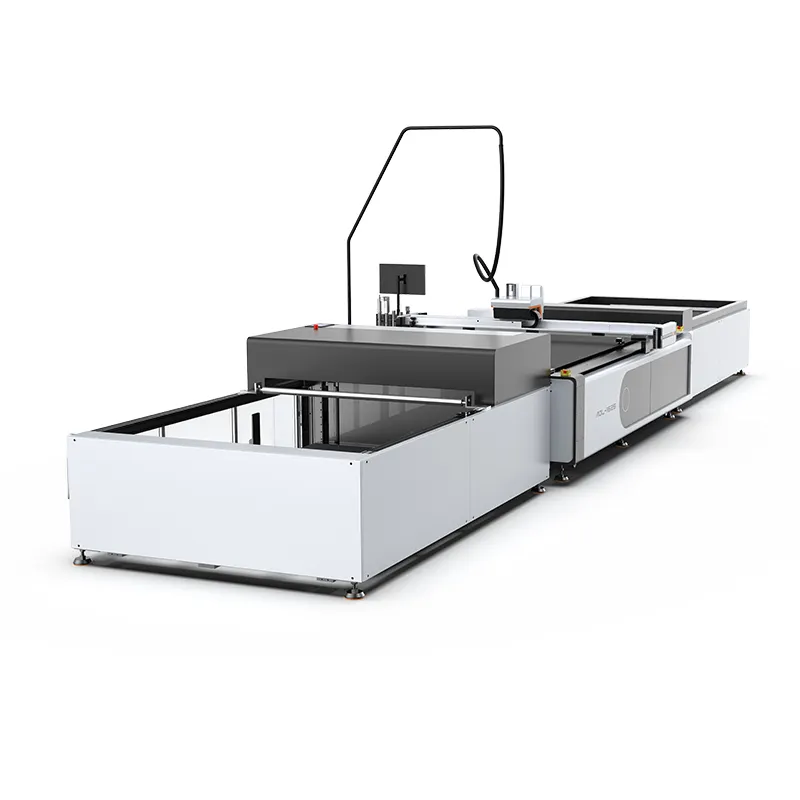
CAD/CAM and Vision-Based Alignment: Reducing Setup Time by 41% in High-Mix Composite Shops
The adoption of automated CAD/CAM workflows has really sped up composite machining processes across the board. These systems use vision technology to map out cutting paths right onto those tricky, irregular preform shapes. They automatically adjust for all sorts of issues that come from different layups and material warping problems. What this means is no more tedious manual checks of cutting paths, and shop floor technicians report saving around two thirds of their programming time. When manufacturers need to switch back and forth between carbon fiber reinforced plastic (CFRP) and glass fiber reinforced plastic (GFRP) parts, the downtime between jobs cuts down by nearly half. The tight coordination between computer numerical control machines maintains extremely close tolerances during shaping operations. This results in parts that require far less post-processing work, especially important when dealing with sensitive prepreg materials where maintaining surface quality is absolutely critical for performance.
Operational Reliability and ROI: Maintenance, Blade Life, and Total Cost of Ownership for Oscillating Cutting Machines
Getting the most out of oscillating cutting machines in terms of reliability and return on investment requires regular maintenance, longer lasting blades, and looking at the whole picture when calculating total cost of ownership. According to a recent Deloitte report from 2023, sticking to basic preventive maintenance routines makes a big difference. Things like cleaning off debris every day, lubricating parts once a week, and calibrating monthly can reduce unexpected downtime by about 30% and actually double the lifespan of these machines. The blades themselves matter too. When operators adjust how fast the machine oscillates and match the right tools to specific materials while using coatings that resist wear, they see annual savings on replacement parts around 28%. And remember, total cost isn't just what we pay upfront for the machine either.
| Cost Factor | Impact on ROI | Mitigation Strategy |
|---|---|---|
| Energy Consumption | High-power models increase operational expenses | Select servo-driven motors |
| Blade Replacements | Frequent changes raise labor/material costs | Use wear-resistant coatings |
| Production Downtime | Unplanned stops cost ~$260k/hour (Deloitte 2023) | Implement predictive maintenance |
Facilities committed to scheduled upkeep achieve 22% higher ROI over five years—driven not just by uptime, but by consistent edge quality, reduced scrap, and minimized rework across composite programs.
FAQ
- How does composite material thickness affect the cutting machine settings? Thin laminates perform best at lower oscillations per minute, whereas thicker sections demand higher pressure to ensure consistent blade engagement, along with optimized feed rates for edge fidelity.
- What are the recommended vacuums and table dimensions for composite cutting? It's advised to have vacuum levels around 85 kPa or higher with work tables sized roughly 2.5 by 1.5 meters for stable cutting of aerospace panels.
- What are the specific cutting machine settings for CFRP and GFRP materials about oscillating cutting machine? CFRP requires diamond coated blades and higher motor torque due to its abrasiveness, whereas GFRP benefits from slower oscillation speeds to reduce fiber pull out.
Table of Contents
- Material Compatibility: Matching Oscillating Cutting Machine Capabilities to Composite Types and Thicknesses
- Edge Quality Assurance: Preventing Delamination and Fiber Fraying with Precision Oscillating Cutting Machine Control
- Performance-Critical Specifications: Vacuum Hold-Down, Work Area, and CNC Integration for Composite Production
- Operational Reliability and ROI: Maintenance, Blade Life, and Total Cost of Ownership for Oscillating Cutting Machines