
 EN
EN
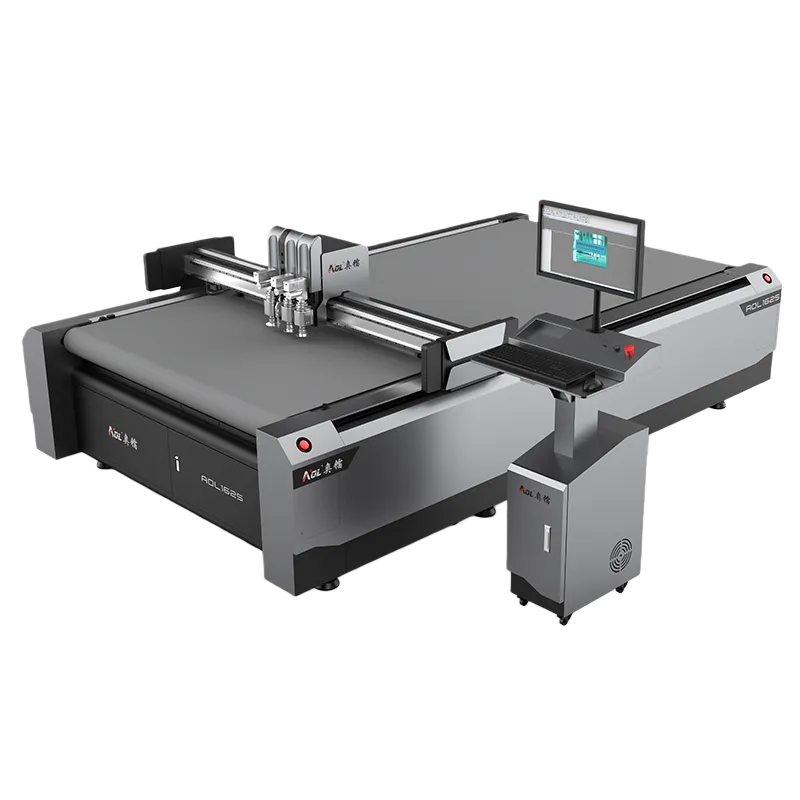
Why a Dedicated CNC Digital Cutting Machine Is Essential for Advanced Composites
Materials such as carbon fiber, Kevlar, and prepreg require special cutting approaches because of how they're structured at a fundamental level. Standard cutting techniques tend to create problems during processing. Carbon fiber layers can separate, aramid fibers get frayed edges, and prepreg materials experience issues with their resin stability when cut improperly. These flaws affect both the strength of the finished parts and their exact dimensions. That's where dedicated CNC cutting machines come into play. These systems are engineered specifically for different materials, allowing cuts with incredible precision down to the micron level something regular equipment just cant match in practice.
Key advantages include:
- Oscillating knife technology that eliminates delamination by cold-cutting through carbon fiber plies
- Real-time pressure modulation countering Kevlar's anisotropic resistance
- Thermally controlled environments maintaining prepreg resin viscosity
- Vacuum hold-down systems preventing material shift during cutting
According to industry reports from CompositesWorld in 2023, companies that switch to purpose built CNC cutters for composite materials see about 40% less waste overall. The improved accuracy makes a real difference too. When making parts for airplanes, components produced on these specialized machines meet dimensional requirements at around 99.8%, compared to only 92% accuracy using standard equipment. Manufacturers working with high tech composites should seriously consider upgrading their cutting tech. While it does cost money upfront, the investment pays off in stronger, more reliable products and better productivity across the board.
Carbon Fiber Cutting: Eliminating Delamination with Oscillating Knife Precision
The delamination and fuzzing challenge in multi-ply carbon fiber
Carbon fiber laminates with multiple plies often suffer from serious cutting problems like delamination where layers separate and fuzzing which causes fibers to stick out. The main culprits? Traditional cutting techniques that create too much heat and sideways force during the process. Once temps hit around 150 degrees Celsius, the epoxy starts to soften and lose grip between layers. At the same time, dull cutting tools tend to pull apart those strong modulus fibers, leaving behind rough edges that mess with both aerodynamic performance and overall structural strength. Industry reports show some aerospace companies dealing with as much as 23% waste because of these cutting challenges when they aren't using optimized approaches.
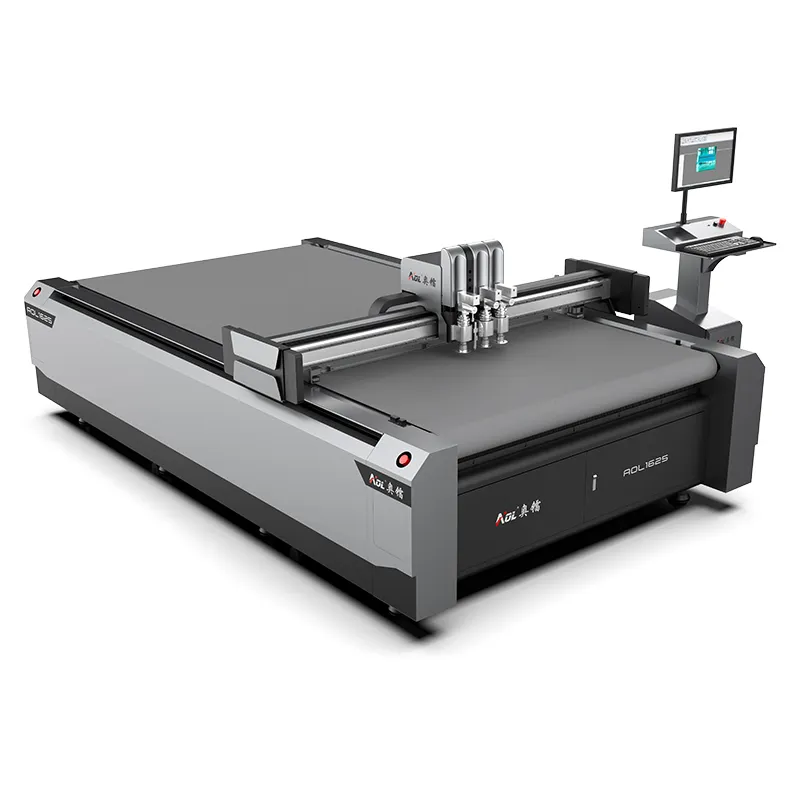
How cold mechanical separation preserves fiber integrity and dimensional accuracy
Advanced CNC digital cutting machines overcome these challenges through oscillating knife technology. This cold-cutting approach maintains material temperatures below 80°C using micro-vibrations (200–500 Hz) that mechanically separate fibers without thermal degradation. Key advantages include:
- Zero resin degradation: Eliminates matrix softening that causes delamination
- Fiber-aligned cutting paths: Diamond-coated blades follow programmed trajectories matching fiber orientation
-
±0.1 mm dimensional accuracy: Maintains tight tolerances for high-performance applications
This process prevents frayed edges while preserving the resin-fiber bond, ensuring cut components meet aerospace and automotive validation standards.
Kevlar and Aramid Cutting: Overcoming Anisotropic Resistance with Adaptive Control
Blade deflection and inconsistent depth caused by high-tensile aramid fibers
Working with Kevlar and similar aramid composites poses special difficulties when it comes to cutting because of how the fibers are arranged anisotropically and their incredible tensile strength, which can reach around 3,600 MPa. These materials behave differently from regular isotropic ones since their fibers resist cutting in certain directions, making standard blades tend to bounce off or wander unexpectedly during operation. When this happens, the resulting cuts end up with inconsistent widths and depths that often vary by more than half a millimeter across typical equipment setups, which really messes with the accuracy of finished parts. Plus, the strong tensile properties of these aramid fibers create substantial resistance against cutting tools, causing blades to wear out much faster than normal. Industry experience shows that shops working with these materials typically need to replace their cutting blades about 40% more often than what's needed for carbon fiber work, adding to maintenance costs and downtime.
Multi-angle oscillation and real-time pressure modulation for uniform cuts
Modern CNC cutting machines tackle those tricky anisotropic issues thanks to their smart adaptive tech. These machines feature multi-angle blade movement that can be adjusted between 15 and 45 degrees. When cutting materials with directional properties, the blades actually slice at right angles to the fibers no matter which way they run. This cuts down on the force needed by about two thirds and stops those annoying frayed edges that plague traditional methods. At the same time, there's a pressure control system constantly checking how much resistance the blade meets. It adjusts the downward force every 5 milliseconds or so, keeping the cut depth steady even when dealing with different fiber concentrations throughout the material. The result? Precision cuts within plus or minus 0.1 millimeters without compromising the material's strength. For industries like aerospace manufacturing or making body armor, this level of accuracy is absolutely essential because damaged fiber structures can mean failure in critical situations.
Prepreg Handling: Maintaining Tack, Resin Integrity, and B-Stage Stability
Prepreg materials demand strict environmental controls to preserve their B-stage resin state—where partial curing maintains critical tackiness without full polymerization. Temperature fluctuations beyond 0°C–10°C risk premature curing or resin migration, while inadequate pressure control during processing causes fiber misalignment.
Vacuum stabilization and thermal management to prevent resin bleed and tack loss
Modern CNC cutting machines come equipped with vacuum systems that hold down prepreg sheets while they're being cut. These systems eliminate shear forces which can cause resin to shift around during processing. At the same time, many systems feature active temperature control keeping work areas below 10 degrees Celsius using chilled cutting beds. Maintaining this cold environment is really important because it helps keep the resin at the right consistency and stops unwanted chemical reactions from happening. The combination of vacuum holding and temperature management cuts down on wasted materials by about 30 percent. What's more, it keeps parts within tight dimensional limits, typically plus or minus 0.1 millimeters, by making sure the resin and fiber stay properly aligned right up until the final curing stage.
FAQ
Why are traditional cutting techniques problematic for composite materials?
Traditional techniques often create excessive heat and force, leading to issues like delamination and frayed edges in composite materials.
What makes oscillating knife technology effective for carbon fiber?
Oscillating knife technology uses cold mechanical separation, preserving fiber integrity by generating minimal heat during the cutting process.
How are prepreg materials affected by temperature and pressure changes?
Prepreg materials risk premature curing or resin migration with temperature fluctuations, while improper pressure can misalign fibers.
Why is adaptive control critical for cutting Kevlar and aramid composites about cnc digital cutting machine?
Adaptive control is crucial to address anisotropic resistance, ensuring uniform cuts by modulating pressure and blade movement in real-time.
Table of Contents
- Why a Dedicated CNC Digital Cutting Machine Is Essential for Advanced Composites
- Carbon Fiber Cutting: Eliminating Delamination with Oscillating Knife Precision
- Kevlar and Aramid Cutting: Overcoming Anisotropic Resistance with Adaptive Control
- Prepreg Handling: Maintaining Tack, Resin Integrity, and B-Stage Stability
-
FAQ
- Why are traditional cutting techniques problematic for composite materials?
- What makes oscillating knife technology effective for carbon fiber?
- How are prepreg materials affected by temperature and pressure changes?
- Why is adaptive control critical for cutting Kevlar and aramid composites about cnc digital cutting machine?