
 EN
EN
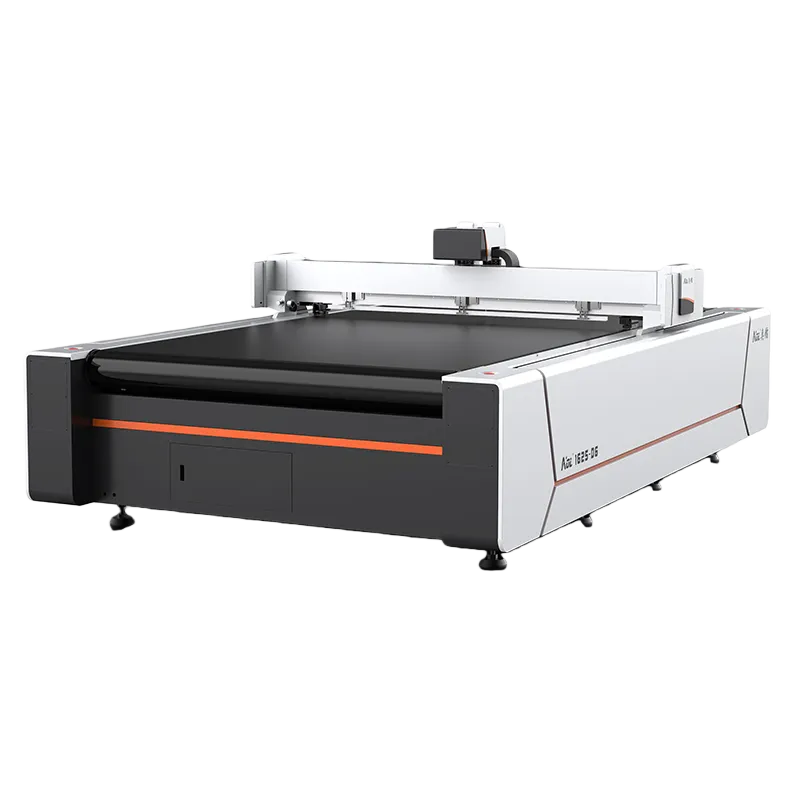
Why Oscillating Cutting Machines Excel at Composite Material Processing
Cold-cutting preservation of fiber integrity and matrix structure
Oscillating cutting machines use a non-thermal, mechanical cutting process that avoids the heat-induced damage common with lasers or plasma methods that can exceed 500°C and degrade resin matrices. By eliminating thermal stress, oscillating systems preserve:
- Fiber alignment in carbon and glass reinforcements
- Thermoset polymer cross-linking
- Interlayer adhesion in laminated composites
Research from the National Composites Centre (2023) shows a 95% reduction in delamination compared to laser cutting, directly contributing to 15–30% higher tensile strength in finished parts—a decisive advantage for aerospace and automotive applications where structural reliability is non-negotiable.
Superior edge quality: eliminating fraying, pull-out, and delamination vs. thermal methods
The blade’s vertical reciprocation (500–5,000 strokes/min), paired with controlled downward pressure, delivers clean shear action—minimizing drag, fiber displacement, and matrix distortion. This results in consistently tool-ready edges:
| Defect Type | Thermal Methods | Oscillating Cutting |
|---|---|---|
| Fiber pull-out | 3.2/mm² | 0.1/mm² |
| Resin fuzzing | Severe | None |
| Edge delamination | 120 µm depth | <5 µm depth |
Source: Composite Cutting Mechanics, Elsevier (2022)
Such precision eliminates secondary finishing in most cases—cutting post-processing time by up to 70% versus abrasive waterjet methods—and removes edge-related stress concentrations that compromise fatigue life in load-bearing components.
Precision, Speed, and Repeatability: Core Performance Metrics of Oscillating Cutting Machines
Achieving ±0.1 mm accuracy: role of CNC control, servo dynamics, and material fixturing
Oscillating cutters today can hit around 0.1 mm accuracy thanks to their connection with CNC systems that take CAD/CAM designs and turn them into actual movements on the machine. The high speed servos really make a difference here since they constantly tweak how hard the cutter is pushing against the material as it goes along. Different laminates have different thicknesses and resin amounts, so this real time adjustment helps keep things smooth. Vacuum tables hold everything down super tight too, which means no slipping happens even when working with those tricky thin composite sheets that tend to move around otherwise. All this precision cuts out all that annoying measurement error that comes from hand measuring, and keeps parts exactly the same size batch after batch. For industries where exact measurements matter a lot like airplane parts or electric vehicle batteries, these machines are basically essential now.
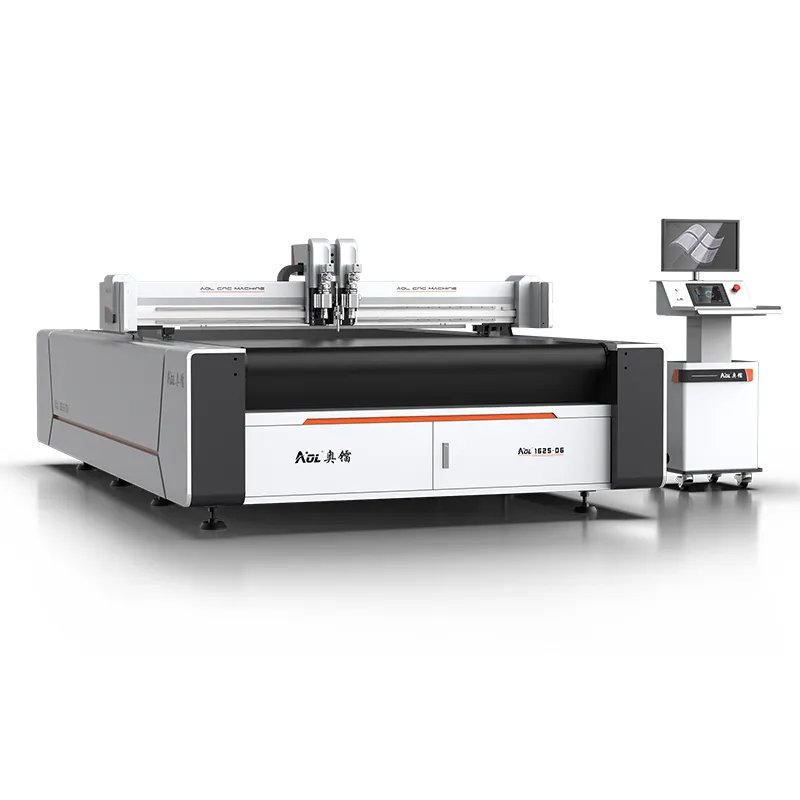
Balancing high throughput (up to 2500 mm/s) with dimensional consistency across large-format composites
Faster doesn't mean worse when it comes to cutting quality these days. Advanced machines can cut at speeds around 2500 mm per second while still keeping their accuracy intact. These systems rely on linear encoders that constantly monitor where the blade actually is versus where it should be. At the same time, smart software adjusts feed rates automatically as it detects variations in material density within carbon fiber composites or layered materials. The machine itself has been built stronger too with reinforced frames and special drives that soak up vibrations. This helps keep everything stable even when making quick directional changes, which prevents those annoying layers from shifting inside multi-panel structures. Because of all this engineering, manufacturers can now process complete 4x8 foot composite panels with consistent results throughout production runs, maintaining dimensional accuracy within about 0.15 mm across every batch.
Optimizing Oscillating Cutting Machines for Diverse Composite Materials
Tailoring cut parameters for carbon fiber, fiberglass, aramid, and hybrid laminates
Getting good results when working with composites isn't about using the same settings every time. It takes smart adjustments based on what material we're dealing with. Carbon fiber reinforced polymers work best at lower oscillation speeds around 5,000 RPM or below, combined with moderate feed rates that help prevent those annoying fiber splinters. Fiberglass is different though it actually needs faster cutting speeds between 1,800 to 2,200 mm per second to keep resin from building up on the tool. When handling aramid fabrics, machinists usually reach for fine toothed or even diamond coated blades since regular tools just can't stop the fraying. And then there are these tricky hybrid laminates like combinations of carbon fiber and glass or thermoplastic over thermoset layers. These materials demand constant on the fly changes to things like amplitude, frequency settings, and how hard the tool presses against the material. The whole point of all this careful calibration is to make sure edges look clean and maintain the structural integrity of the finished part.
Smart tooling strategies: blade geometry, oscillation angle, and automatic tool change for composites
Smart tooling really makes a difference in how things perform. Take those tapered blades with edge angles ranging from around 25 to 35 degrees they cut through carbon fiber materials exceptionally clean. And when it comes to working with glass fibers, the serrated blade profiles help keep everything contained where it should be during processing. The oscillation angle settings between approximately 1.5 and 3.5 degrees are pretty remarkable too. These settings actually cut down lateral forces acting on thermoplastic matrix materials by as much as 40 percent, which means better preservation of weld lines in co-cured composite parts. What's especially useful is the built-in Automatic Tool Change system. This lets operators switch quickly and consistently between different tools like oscillating knives, creasing implements, and various routing bits all within one setup. That capability becomes critical when dealing with complex aerospace panel fabrication tasks. When paired with vacuum fixation methods, this combination delivers rock solid cutting results even when handling extremely thin prepreg sheets or delicate soft core sandwich constructions that would challenge standard equipment.
FAQ
What makes oscillating cutting machines suitable for composite materials?
Oscillating cutting machines excel at composite material processing due to their non-thermal, mechanical cutting process, preserving fiber integrity and matrix structure without inducing thermal stress.
How do oscillating cutting machines achieve consistent accuracy?
Achieving ±0.1 mm accuracy is possible through the integration of CNC systems, real-time adjustments using high-speed servos, and precise material fixturing techniques.
What are the advantages in terms of speed and dimensional consistency?
Modern oscillating cutting machines can achieve high throughput speeds of up to 2500 mm/s while maintaining dimensional consistency across large-format composites, aided by advanced monitoring and structural reinforcement.
Can oscillating cutting machines handle various composite types effectively?
Yes, oscillating cutting machines are optimized for diverse composite materials by tailoring cut parameters and using smart tooling strategies, including blade geometry and oscillation angle adjustments.