
 EN
EN
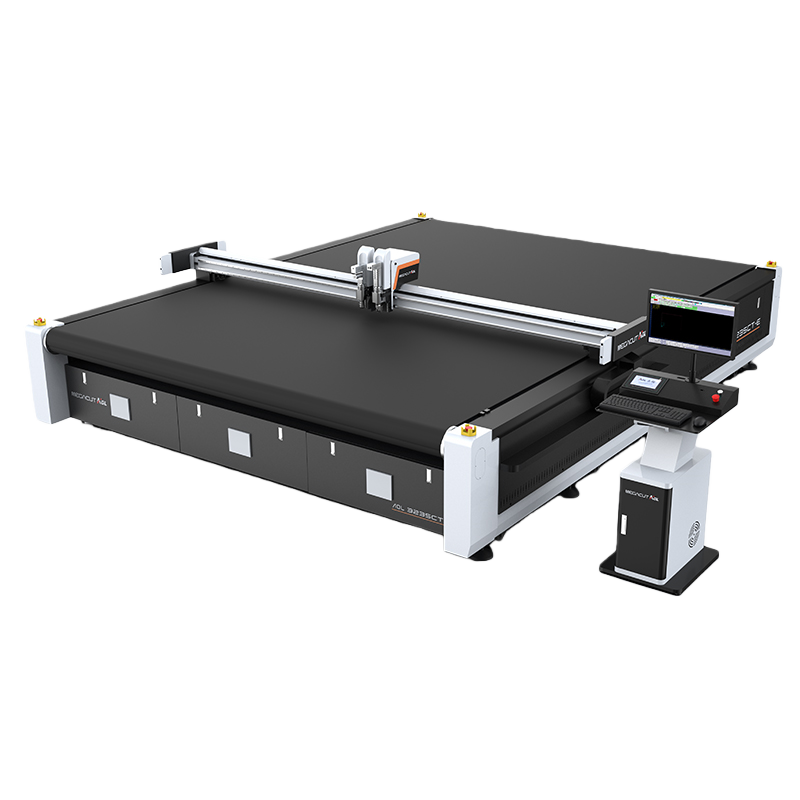
Why CNC Cardboard Cutters Accelerate Packaging Sampling
Solving the 72-Hour Prototype Bottleneck in Corrugated and Folding Carton Development
Brands lose around $740,000 each year because traditional prototyping takes so long according to the latest industry data from 2023. With CNC cardboard cutters, companies can skip all those die making and setup steps that previously took weeks. What once required three whole weeks now gets done in just three days flat. The speed means designers can test ideas quickly, make changes to structures within the same day, and get immediate reactions from people who matter at the company. Top notch machines do this by automating everything from digital files straight to cutting tools without needing any steel rule dies at all. As a result, packaging concepts reach shelves almost 90% quicker than before, which makes a huge difference when trying to stay ahead of competitors.
Precision Engineering: Sub-Millimeter Knife Registration, Dynamic Creasing, and Multi-Layer Nesting in One Pass
Modern packaging-specific CNC cutters—not generic CNC fabric cutting machines, which are engineered for flexible textiles—deliver precision built for rigid substrates:
- ±0.2mm registration accuracy via optical recognition and closed-loop motion control
- Real-time crease-depth adjustment synchronized with cutting paths
- Multi-layer nesting that processes up to three corrugated sheets in a single pass
This one-pass capability slashes material waste by 22% compared to manual or semi-automated methods. It also unlocks complex functional features—auto-lock tabs, micro-perforations, laminated window cutouts—that conventional die-cutting cannot reliably reproduce at prototype scale.
How CNC Cardboard Cutters Make Short-Run Production Profitable
Meeting Brand Demand: The Shift Toward Sub-500-Unit Runs and Rejection of Traditional Flexo Setup Fees
More brands are asking for small batch packaging runs below 500 units these days just to see if something will catch on before investing big bucks. They're also turning away from old school flexo printing because those setup fees can really burn a hole in the wallet (we're talking anywhere from $1,200 to over $5,500 per print job). Enter CNC cardboard cutters which basically cut out those initial costs altogether by swapping out physical printing plates for computer generated cutting paths. According to McKinsey's latest report from 2023, around three quarters of consumer product companies have shifted focus toward more flexible manufacturing approaches lately. Traditional methods typically need at least 5,000 units ordered just to cover all those setup costs, but with CNC tech, businesses can actually turn a profit even when making as few as 50 to 500 items without compromising on quality or structural strength. What does this mean? Less hassle when trying out new packaging designs and much clearer cost calculations per item produced, which matters a lot for those specialty products and holiday season releases that come and go so quickly.
Intelligent Tool Management: Seamless Mid-Job Switching Between Creasing Rules, Scoring Wheels, and Drag Knives
Modern CNC cardboard machines come equipped with automated tool heads that can switch between different functions like creasing, cutting, and scoring without stopping the machine. What does this mean? Complex items such as double wall boxes complete with built-in handles can be processed entirely in one continuous run through the machine. Take corrugated blanks for instance. As they move through the system, creasing tools automatically activate at the right spots for folding, keeping everything aligned within about 0.15 mm accuracy throughout the whole process. Getting rid of those time consuming changeovers saves manufacturers loads of downtime that used to eat up anywhere from half an hour to almost an hour and a half each time they switched setups. When combined with smart software that optimizes how materials are laid out, these systems manage to use around 95% of the raw material. That makes running small batches financially feasible even when dealing with complicated designs that need multiple different cutting and forming operations.
Material Versatility: What Modern CNC Cardboard Cutters Can (and Cannot) Process
Clarifying Misconceptions: Why 'CNC Fabric Cutting Machine' Specifications Are Irrelevant to Packaging Substrate Performance
Evaluating CNC cardboard cutters using specifications from textile-focused equipment leads to flawed assumptions. Packaging substrates—including corrugated board, chipboard, honeycomb cores, and laminated composites—demand fundamentally different engineering than fabrics. Key distinctions include:
- Material rigidity and layer density, requiring optimized blade penetration forces (5–12 kg) and oscillating knife systems to prevent delamination
- Abrasive resistance, necessitating tungsten carbide or diamond-coated blades—unlike fabric machines designed for minimal downforce
- Simultaneous creasing and cutting, a non-negotiable workflow requirement for packaging that remains absent in most textile systems
- Particulate dust management, as cardboard generates fine, conductive dust requiring integrated extraction—not optional add-ons
The bottom line is that things like how fast something contours or how accurately it handles fabric really don't tell us much about actual packaging results, production rates, or how long tools last. If we want to know what works well in real world conditions, we need to look at established benchmarks for corrugated processing instead. Standards such as TAPPI T 815 measure creasing quality, ISO 12647-6 looks at cutting precision, while ASTM D7295 tests how tools hold up when subjected to repeated stress over time. These aren't just numbers on paper they represent real world performance indicators that manufacturers rely on daily.
Frequently Asked Questions
-
What are CNC cardboard cutters?
CNC cardboard cutters are automated machines that use computer-generated cutting paths to shape cardboard, skipping traditional die-making processes. -
How do CNC cardboard cutters accelerate packaging sampling?
These machines reduce the prototyping time from weeks to days by automating design changes and cutting processes, allowing rapid testing and iteration. -
Can CNC cardboard cutters handle small batch production?
Yes, they are particularly suited for smaller runs as they avoid the high setup costs associated with traditional methods, making short-run production profitable. -
What kinds of materials can CNC cardboard cutters process?
They work with packaging substrates like corrugated board, chipboard, and honeycomb cores, but not fabrics, which require different machine specifications.