
 EN
EN
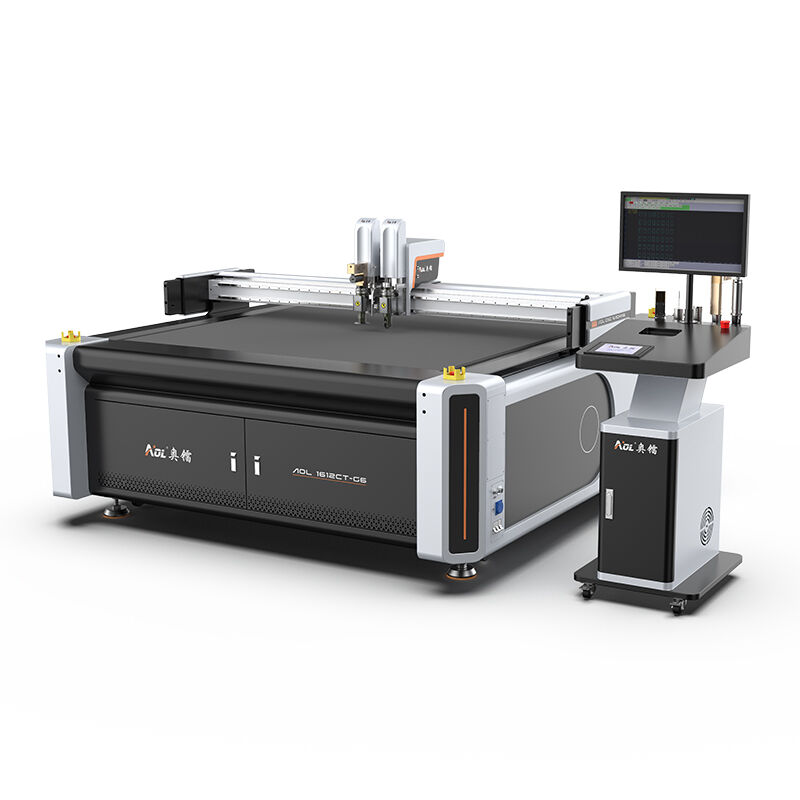
Material Compatibility and Thickness Limits for Oscillating Cutting Machines
Oscillating cutting machines excel in processing diverse materials for protective packaging, with precise thickness limits and compatibility ensuring clean cuts and minimal waste across foam and non-foam substrates.
Foam Materials: EVA, EPE, PE, PVC, and EPS — Optimal Thickness Ranges (5–150 mm) and Cut Behavior
Materials such as EVA foam, EPE foam, regular PE foam, PVC foam, and expanded polystyrene work really well with those CNC oscillating knife cutters out there. Most machines handle thicknesses between about 5mm up to around 150mm, but what works best actually depends on the specific type of foam being used. For example, EVA tends to perform great when it's anywhere from 5mm to 100mm thick because it springs back after cutting which helps reduce fraying issues. Thicker PVC foams usually need to be somewhere between 10mm and 120mm thick and require higher oscillation rates so they don't get too hot during processing and lose their sharp edges. Expanded polystyrene needs careful handling too, typically working best at 20mm to 150mm where precise blade movement prevents crumbling and keeps dimensions accurate. How these materials react to cutting varies quite a bit too. Both EPE and standard PE tend to squish if pushed too hard, so operators should keep downforce light and run at moderate speeds to avoid bubbles forming on the surface. On the other hand, PVC and EPS respond better when settings are properly adjusted to cut smoothly without dragging or causing melting problems. Getting this right makes all the difference in large scale production runs like making custom packaging inserts, since it cuts down waste and ensures every piece looks good no matter how many thousands get produced.
Non-Foam Protective Materials: Corrugated Cardboard, Honeycomb Board, and Sponge — Edge Quality and Structural Integrity
When working with non-foam protective materials such as corrugated cardboard, honeycomb board, and sponge, special attention must be paid to the oscillating knife technique to maintain good edges and keep the structure sound. For corrugated cardboard, clean cuts can usually be made up to around 10 mm thick if the blades are sharp enough and the machine runs at moderate speed. This helps avoid those frustrating frayed edges and excessive dust buildup during production. Honeycomb board presents different challenges because of its hexagonal paper core. These boards need a gentler approach with careful control over how hard the blade presses down and what frequency the oscillations occur at. After all, we want to make sure the box can still hold things without collapsing later on. Sponge materials are another story entirely. Soft and squishy by nature, they require very fine blades and exact depth adjustments just right so that the finished product has smooth edges without any tears. The whole point is creating proper cushioning liners after all. Keeping structural integrity means making sure honeycomb doesn't fall apart completely during cutting since it needs to absorb impacts properly. Similarly, the sponge's cell structure has to stay intact even when compressed to work effectively. Getting these details right makes all the difference between packaging that looks professional and lasts versus ones full of jagged edges or damaged areas that compromise protection.
Blade Selection and Tool Configuration for Precision Oscillating Cutting Machines
Knife Geometry, Coating Technologies, and Wear Resistance for High-Volume Foam Processing
The choice between straight-edge, wave-pattern, or reverse-hook blades makes all the difference when cutting foam materials. When working with EVA and polyethylene foams ranging from 5 to 150 mm thick, most manufacturers find that blades angled at around 30 to 45 degrees work best for reducing drag without compromising the shape integrity of the final product. Some shops have started using advanced coatings like diamond-like carbon (DLC) on their cutting tools, which can triple the life span of regular blades. This matters a lot in facilities running 10 thousand pieces per day or more, where every hour counts. These coated blades stay sharp longer, meaning fewer interruptions during production runs. Getting the material specifics right also helps avoid problems like compressed foam sections or residue buildup after cutting. This becomes absolutely essential in medical packaging applications where tolerances need to be measured in microns, not millimeters.
Kiss-Cutting vs. Through-Cutting: Blade Angles and Depth Control for Multi-Layer Protective Packaging
Oscillating knife cutting machines achieve distinct results through strategic depth calibration:
- Kiss-cutting (partial-depth) uses 15–20° blade angles with ±0.1 mm depth tolerance to perforate top layers without damaging underlying substrates—ideal for adhesive-backed foam liners
- Through-cutting employs 25–30° angles and higher downforce to cleanly sever multi-material assemblies like corrugated-honeycomb composites
The adjustable amplitude range from 3 to 8 mm allows for smooth switching between different techniques during a single production run, which is really important for making those hybrid packages that combine standard materials with built-in cushioning features. Our depth sensing technology keeps things accurate within plus or minus 0.05 mm even when dealing with stacks as thick as 50 layers. This helps avoid expensive mistakes such as undercutting parts or damaging backing surfaces. All this flexibility makes it possible to handle complicated protective designs that need varying depths all in one go through the machine. Compared to traditional manual approaches, we've seen our customers boost their output rates by about 40 percent, sometimes more depending on what exactly they're manufacturing.
CNC Oscillating Cutting Machine Applications in Protective Packaging Manufacturing
Real-World Use Cases: Custom Foam Insets, Die-Cut Boxes, and Hybrid Liners with Integrated Cushioning
The CNC oscillating knife cutting machine has become a game changer for protective packaging production, primarily because of how it handles three main tasks. When making those custom foam inserts needed for delicate items like electronics or medical equipment, these machines can make incredibly accurate cavity cuts in various foam types including EVA, PE, and EPS across thicknesses from 5mm all the way up to 150mm. What's really impressive is that they cut down on wasted material during manual trimming by around 15 to 30 percent, plus they handle last minute design tweaks without waiting for new tooling. For corrugated boxes that need die cutting, the special vibrating blade keeps those important fluted layers intact, so there's no crushing at the edges even though it works pretty fast - we're talking about speeds reaching 1.5 meters per second. Some smart manufacturers combine both functions into what they call hybrid systems. These setups let them work with multiple materials at once, where the oscillating knife actually cuts through foam padding attached to corrugated board in one go, which cuts down on assembly work by roughly 40%. The flexibility here means companies can prototype quickly and run smaller batches without investing in expensive dies upfront.
Cutting Parameter Optimization for Clean, Deformation-Free Results
Speed, Oscillation Frequency, and Downforce Tuning by Material Type and Thickness
Getting clean cuts in foam materials and protective packaging really comes down to getting three main settings just right: how fast the blade moves, how often it vibrates, and how much pressure it applies. When working with thick EVA foam between 5 and 30 mm, we usually run at faster speeds around 15 to 20 meters per minute with medium vibration levels between 8 and 10 kilohertz. This helps prevent the material from melting due to heat buildup. But when dealing with softer PE foams, things get trickier. We need to slow down to about 8 to 12 meters per minute otherwise the material tends to tear apart during cutting. The amount of downward force needed changes based on material thickness too. For thin EPS sheets around 20 mm thick, somewhere between 50 and 100 Newtons works well. However, when cutting rigid PVC that's 100 mm thick, we typically need double that force range, around 200 to 300 Newtons, to keep the blade engaged properly without squishing the material. If these settings aren't adjusted correctly, there's actually a 40% chance of deforming corrugated cardboard because the fibers get messed up during cutting. That's why experienced operators always start by tweaking the vibration frequency first. Higher frequencies between 12 and 15 kHz produce cleaner kiss cuts in those multi-layer liner materials, whereas lower frequencies around 5 to 7 kHz work better for cutting through honeycomb board structures completely. Watching what happens with the chips as they form gives instant clues about whether adjustments are needed, which makes all the difference in maintaining good structural integrity throughout different types of protective packaging.
FAQ
What materials can be cut using oscillating cutting machines?
Oscillating cutting machines can process a variety of foam materials such as EVA, EPE, PE, PVC, and EPS, as well as non-foam materials like corrugated cardboard, honeycomb board, and sponge.
What is the optimal thickness range for cutting foam materials?
The optimal thickness range for foam materials generally spans from 5mm to 150mm, depending on the specific type of foam being used.
How do you ensure edge quality when cutting non-foam materials?
Maintaining edge quality involves using the appropriate blade sharpness, speed, and oscillation frequency to avoid frayed edges and dust buildup.
What are the benefits of using coated blades?
Coated blades, like those with diamond-like carbon (DLC), can last up to three times longer than regular blades, minimizing interruptions in production and enhancing cutting precision.
How do kiss-cutting and through-cutting differ?
Kiss-cutting involves partial-depth cuts using 15–20° blade angles, ideal for adhesive-backed liners, while through-cutting fully severs materials using 25–30° angles.
Table of Contents
- Material Compatibility and Thickness Limits for Oscillating Cutting Machines
- Blade Selection and Tool Configuration for Precision Oscillating Cutting Machines
- CNC Oscillating Cutting Machine Applications in Protective Packaging Manufacturing
- Cutting Parameter Optimization for Clean, Deformation-Free Results
- FAQ