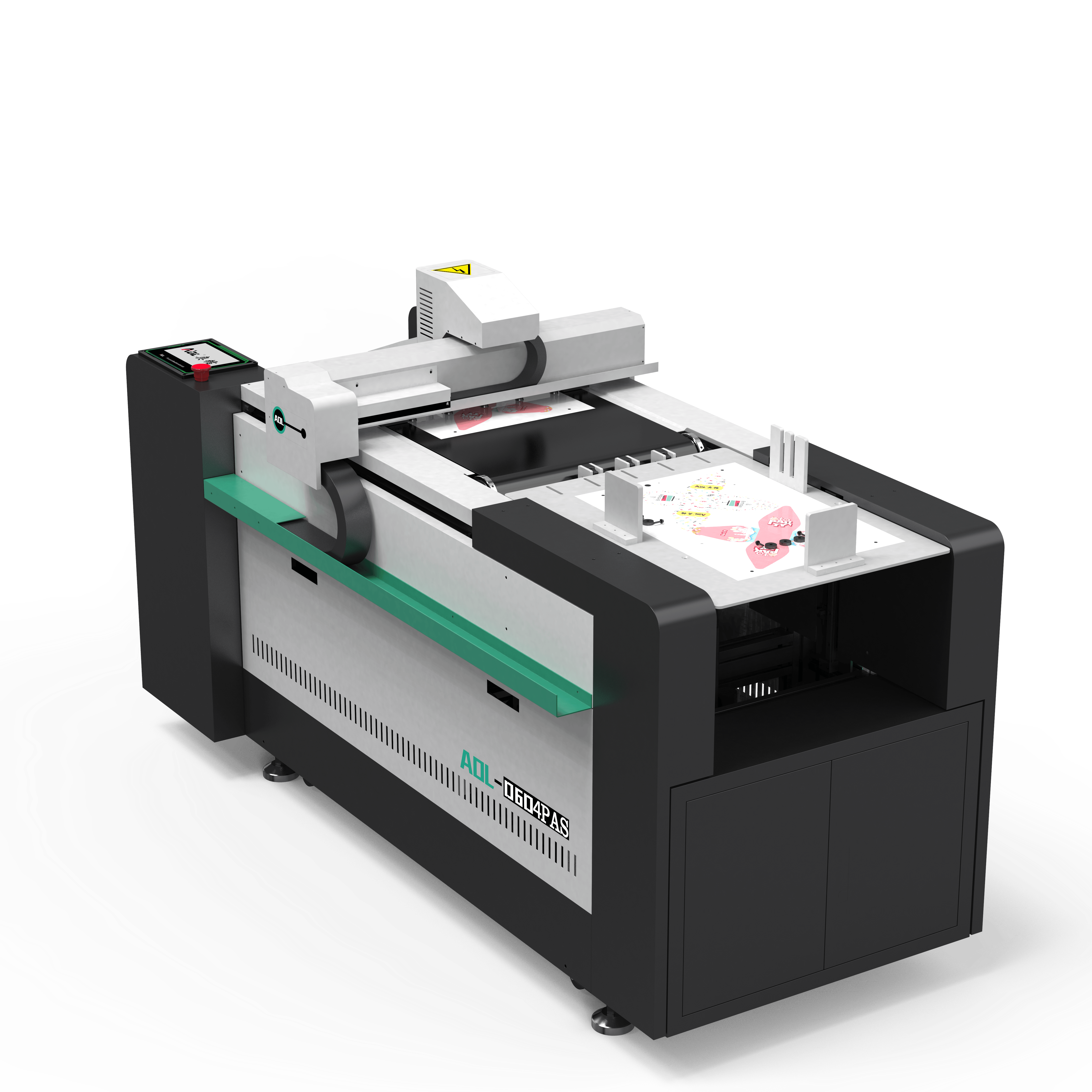
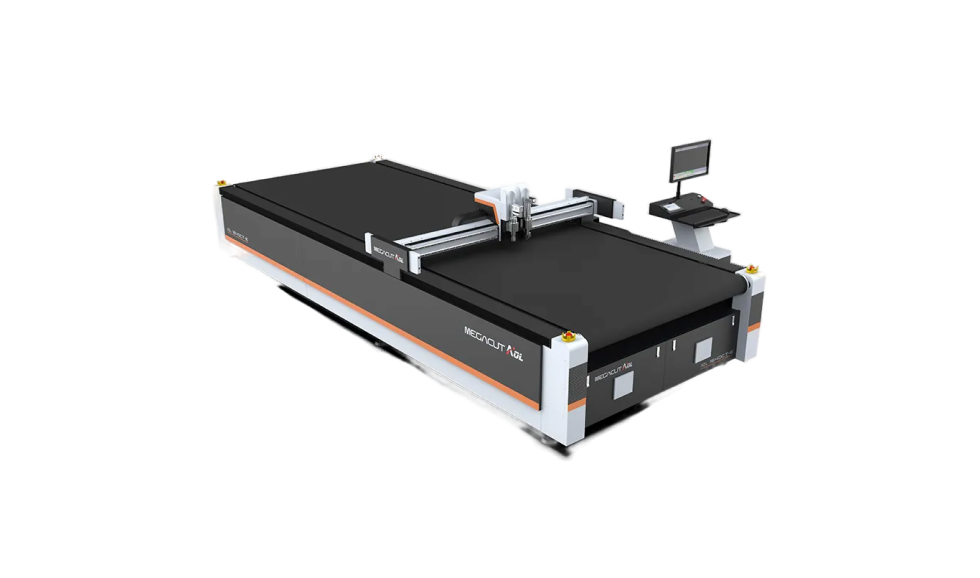
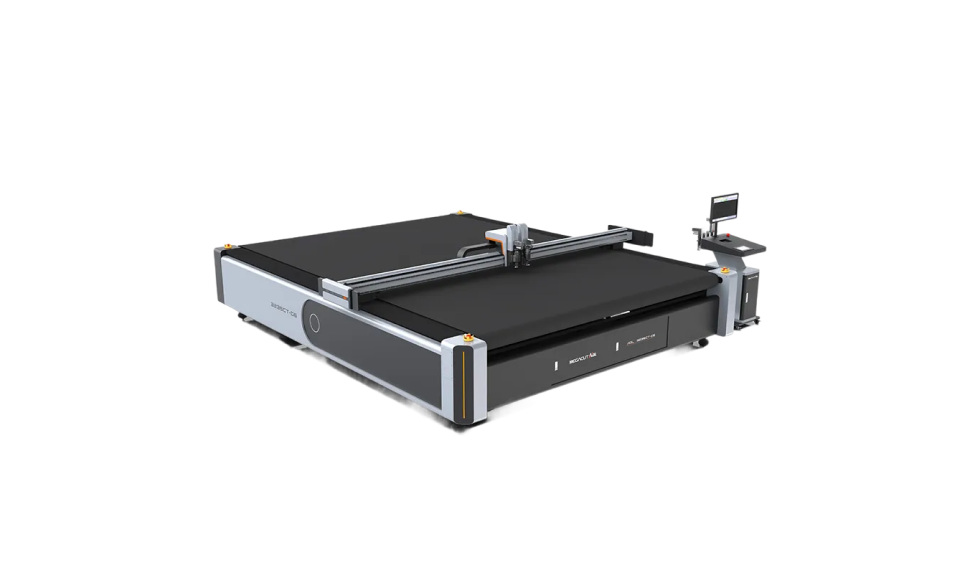
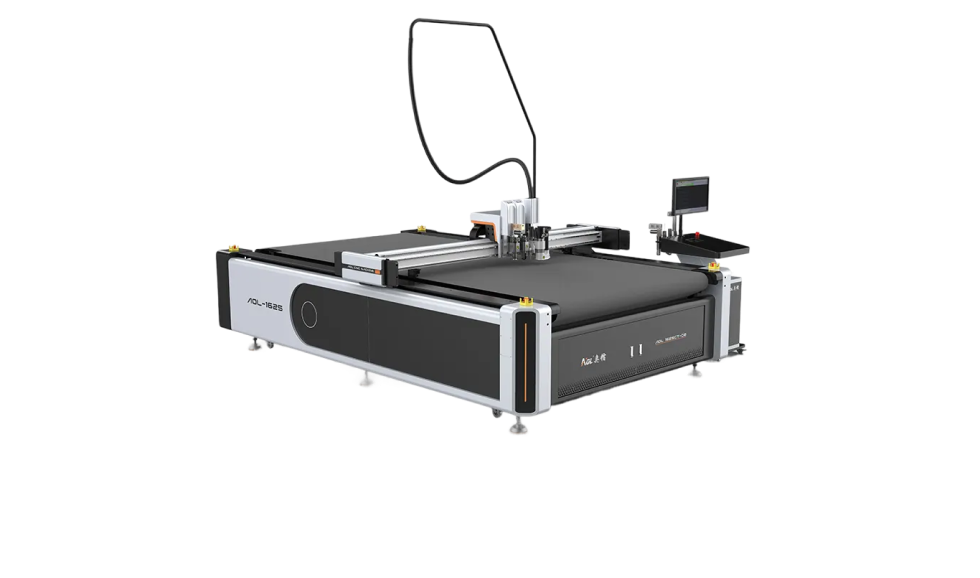
As the global construction industry pursues sustainable, highly translucent, and weather-resistant materials, the market demand for ETFE (ethylene-tetrafluoroethylene copolymer) is experiencing exponential growth. With ETFE progressively replacing traditional glass and heavy cladding materials in millions of square meters of new construction projects, the market's need for precise, automated processing equipment has become critical, opening vast application prospects for ETFE membrane digital cutting machines.
Within the core markets of tensioned membrane structures and sports venue construction, ETFE applications are both the most mature and largest in scale. As premier events like the World Cup and Olympics drive global stadium development, architects increasingly specify ETFE for roofing and facade systems. These projects demand high-speed cutting of rolled ETFE film into complex geometric shapes (such as air cushions). Digital cutting machines, with their ability to handle intricate patterns and processing speed, have become essential equipment for meeting tight project deadlines. Simultaneously, in modern facility agriculture, high-transmittance greenhouses are transitioning from traditional plastic films to multi-layer ETFE systems to achieve superior thermal insulation and light transmission. Whether for roof cladding or vertical wall coverings, these installations necessitate rapid, repeatable, and extremely precise width-specific cutting of ETFE membrane materials. The “cut-and-weld-on-site” edge processing capability provided by digital equipment significantly enhances on-site installation efficiency.
Beyond building exteriors, ETFE is also emerging in high-end interior design. Designers leverage its translucency to create partitions, artistic ceilings, or acoustic panels. These interior applications often demand intricate cutouts or detailed patterns, and digital cutters are uniquely capable of handling the artistic processing from prototype sampling to mass production without damaging the delicate membrane material. Furthermore, in the renewable energy sector, the integration of thin-film solar cells with ETFE is emerging as a cutting-edge trend alongside the advancement of Building-Integrated Photovoltaics (BIPV) technology. Cutting these composite materials with integrated printed electronic components necessitates non-contact or zero-vibration digital cutting processes to prevent damage to fragile power-generating modules, opening entirely new high-value-added application scenarios for digital cutting technology.
In summary, the core market drivers fueling demand for this equipment are: the need to maximize utilization of expensive ETFE materials through digital nesting software to reduce waste; increasingly complex architectural designs demand equipment capable of handling curved and multi-angle cuts beyond manual tool capabilities; and automation represents the sole pathway for membrane structure fabrication plants to scale operations amid a shortage of skilled labor. Consequently, ETFE membrane digital cutting machines serve not merely as processing tools, but as bridges connecting innovative architectural designs with tangible implementation.

 EN
EN