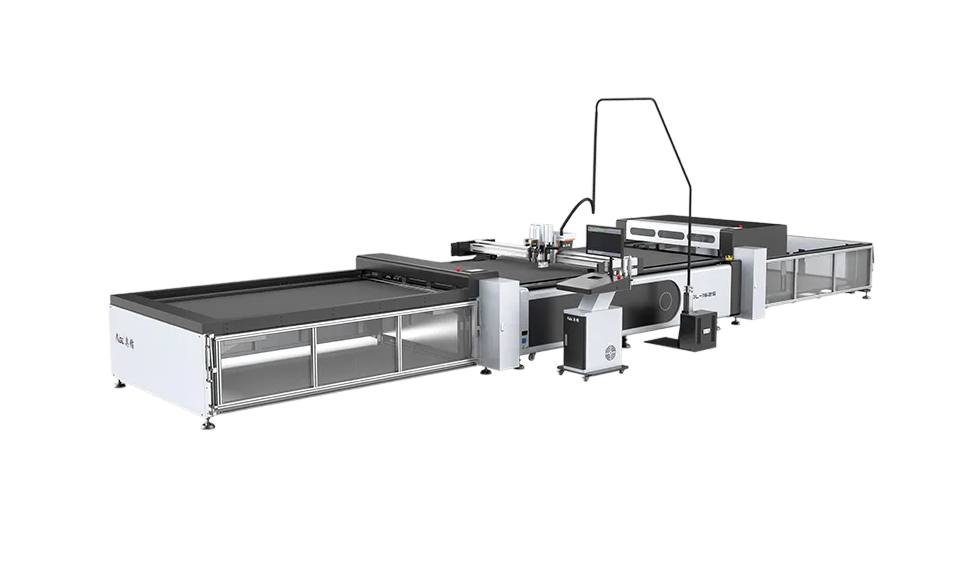
In the aerospace and defense sectors, composite materials face the most stringent applications, where cutting requirements for fuselage panels, wing ribs, and interior support structures demand zero defects and absolute cleanliness. With the development of urban air mobility and next-generation fighter jets, demand for automated composite cutting equipment in this field is steadily rising at an 8.5% compound annual growth rate. Ultrasonic cutting and delamination prevention technologies have become critical to ensuring the processing quality of aerospace-grade carbon fiber prepregs.
In the renewable energy sector, the trend toward larger wind turbine blades imposes extreme demands on cutting glass fiber skins and core materials. For megawatt-class blades, automated cutting not only handles complex operations on oversized layups but also reduces material waste by over 15%, enabling turbine manufacturers to achieve scalable cost reductions amid the global net-zero emissions push.
The automotive and motorsports sectors are undergoing a lightweighting revolution, with composite materials expanding from F1 chassis to EV battery casings. Addressing fireproofing and weight reduction demands for battery housings in electrification requires cutting equipment with rapid changeover capabilities to handle the high flexibility challenges of mixed production involving carbon fiber, dry glass fiber, and prepregs.
In shipbuilding, the customization demands of luxury yachts are driving composite cutting toward high precision and environmental resistance. Cutting hulls, decks, and sandwich structures requires overcoming challenges posed by thick wet lay-up layers, where flexible cutting technology perfectly aligns with the small-batch, multi-variety production characteristics of high-end vessels.
The lightweighting trend is equally pronounced in sports and leisure. From carbon fiber bicycle frames to hockey sticks, composite materials are transitioning from professional arenas to mass markets. As production costs optimize, surging output of sports equipment like skis and racquets makes high-speed, stable cutting essential for ensuring consistent mass production quality.

 EN
EN